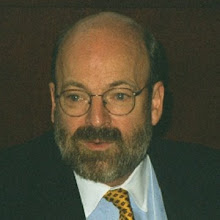
The author here is amazingly influential (couple of wonderful books I strongly recommend; both are short, accessible and packed with insight: “Complications” and “Better”). Doctor in Boston and New Yorker’s health correspondent for years. Has spent lots of time with the Clinton and Obama crowds.
This is a really powerful, thoughtful article. Even if you don’t care much about health care reform, this is an excellent read. He uses a couple of specific places (a town in Texas; Colorado; Mayo) to make a series of critical points about health care.
The Dartmouth Medical School studies are critical to understanding the new Administration’s approach to cost control. Those studies are OMB Director Peter Orszag’s bible to getting a handle on health care costs. In short, the studies have been showing that there are wilding varying differences in levels of treatment and thus expenditures for the same diseases around the country, and no correlation of that spending with better medical outcomes.
This explains the focus in the stimulus package on electronic health records to capture exactly what we are doing, $1.1 billion in research by HHS to determine what the data says is the right and cost effective thing(s) to do for each illness, and then down the road incent/only pay for following that protocol.
Best wishes to all!
Annals of Medicine: The Cost Conundrum (The New Yorker)
What a Texas town can teach us about health care.
By Atul Gawande
June 1, 2009
It is spring in McAllen, Texas. The morning sun is warm. The streets are lined with palm trees and pickup trucks. McAllen is in Hidalgo County, which has the lowest household income in the country, but it’s a border town, and a thriving foreign-trade zone has kept the unemployment rate below ten per cent. McAllen calls itself the Square Dance Capital of the World. “Lonesome Dove” was set around here.
McAllen has another distinction, too: it is one of the most expensive health-care markets in the country. Only Miami—which has much higher labor and living costs—spends more per person on health care. In 2006, Medicare spent fifteen thousand dollars per enrollee here, almost twice the national average. The income per capita is twelve thousand dollars. In other words, Medicare spends three thousand dollars more per person here than the average person earns.
The explosive trend in American medical costs seems to have occurred here in an especially intense form. Our country’s health care is by far the most expensive in the world. In Washington, the aim of health-care reform is not just to extend medical coverage to everybody but also to bring costs under control. Spending on doctors, hospitals, drugs, and the like now consumes more than one of every six dollars we earn. The financial burden has damaged the global competitiveness of American businesses and bankrupted millions of families, even those with insurance. It’s also devouring our government. “The greatest threat to America’s fiscal health is not Social Security,” President Barack Obama said in a March speech at the White House. “It’s not the investments that we’ve made to rescue our economy during this crisis. By a wide margin, the biggest threat to our nation’s balance sheet is the skyrocketing cost of health care. It’s not even close.”
The question we’re now frantically grappling with is how this came to be, and what can be done about it. McAllen, Texas, the most expensive town in the most expensive country for health care in the world, seemed a good place to look for some answers.
From the moment I arrived, I asked almost everyone I encountered about McAllen’s health costs—a businessman I met at the five-gate McAllen-Miller International Airport, the desk clerks at the Embassy Suites Hotel, a police-academy cadet at McDonald’s. Most weren’t surprised to hear that McAllen was an outlier. “Just look around,” the cadet said. “People are not healthy here.” McAllen, with its high poverty rate, has an incidence of heavy drinking sixty per cent higher than the national average. And the Tex-Mex diet has contributed to a thirty-eight-per-cent obesity rate.
One day, I went on rounds with Lester Dyke, a weather-beaten, ranch-owning fifty-three-year-old cardiac surgeon who grew up in Austin, did his surgical training with the Army all over the country, and settled into practice in Hidalgo County. He has not lacked for business: in the past twenty years, he has done some eight thousand heart operations, which exhausts me just thinking about it. I walked around with him as he checked in on ten or so of his patients who were recuperating at the three hospitals where he operates. It was easy to see what had landed them under his knife. They were nearly all obese or diabetic or both. Many had a family history of heart disease. Few were taking preventive measures, such as cholesterol-lowering drugs, which, studies indicate, would have obviated surgery for up to half of them.
Yet public-health statistics show that cardiovascular-disease rates in the county are actually lower than average, probably because its smoking rates are quite low. Rates of asthma, H.I.V., infant mortality, cancer, and injury are lower, too. El Paso County, eight hundred miles up the border, has essentially the same demographics. Both counties have a population of roughly seven hundred thousand, similar public-health statistics, and similar percentages of non-English speakers, illegal immigrants, and the unemployed. Yet in 2006 Medicare expenditures (our best approximation of over-all spending patterns) in El Paso were $7,504 per enrollee—half as much as in McAllen. An unhealthy population couldn’t possibly be the reason that McAllen’s health-care costs are so high. (Or the reason that America’s are. We may be more obese than any other industrialized nation, but we have among the lowest rates of smoking and alcoholism, and we are in the middle of the range for cardiovascular disease and diabetes.)
Was the explanation, then, that McAllen was providing unusually good health care? I took a walk through Doctors Hospital at Renaissance, in Edinburg, one of the towns in the McAllen metropolitan area, with Robert Alleyn, a Houston-trained general surgeon who had grown up here and returned home to practice. The hospital campus sprawled across two city blocks, with a series of three- and four-story stucco buildings separated by golfing-green lawns and black asphalt parking lots. He pointed out the sights—the cancer center is over here, the heart center is over there, now we’re coming to the imaging center. We went inside the surgery building. It was sleek and modern, with recessed lighting, classical music piped into the waiting areas, and nurses moving from patient to patient behind rolling black computer pods. We changed into scrubs and Alleyn took me through the sixteen operating rooms to show me the laparoscopy suite, with its flat-screen video monitors, the hybrid operating room with built-in imaging equipment, the surgical robot for minimally invasive robotic surgery.
I was impressed. The place had virtually all the technology that you’d find at Harvard and Stanford and the Mayo Clinic, and, as I walked through that hospital on a dusty road in South Texas, this struck me as a remarkable thing. Rich towns get the new school buildings, fire trucks, and roads, not to mention the better teachers and police officers and civil engineers. Poor towns don’t. But that rule doesn’t hold for health care.
At McAllen Medical Center, I saw an orthopedic surgeon work under an operating microscope to remove a tumor that had wrapped around the spinal cord of a fourteen-year-old. At a home-health agency, I spoke to a nurse who could provide intravenous-drug therapy for patients with congestive heart failure. At McAllen Heart Hospital, I watched Dyke and a team of six do a coronary-artery bypass using technologies that didn’t exist a few years ago. At Renaissance, I talked with a neonatologist who trained at my hospital, in Boston, and brought McAllen new skills and technologies for premature babies. “I’ve had nurses come up to me and say, ‘I never knew these babies could survive,’ ” he said.
And yet there’s no evidence that the treatments and technologies available at McAllen are better than those found elsewhere in the country. The annual reports that hospitals file with Medicare show that those in McAllen and El Paso offer comparable technologies—neonatal intensive-care units, advanced cardiac services, PET scans, and so on. Public statistics show no difference in the supply of doctors. Hidalgo County actually has fewer specialists than the national average.
Nor does the care given in McAllen stand out for its quality. Medicare ranks hospitals on twenty-five metrics of care. On all but two of these, McAllen’s five largest hospitals performed worse, on average, than El Paso’s. McAllen costs Medicare seven thousand dollars more per person each year than does the average city in America. But not, so far as one can tell, because it’s delivering better health care.
One night, I went to dinner with six McAllen doctors. All were what you would call bread-and-butter physicians: busy, full-time, private-practice doctors who work from seven in the morning to seven at night and sometimes later, their waiting rooms teeming and their desks stacked with medical charts to review.
Some were dubious when I told them that McAllen was the country’s most expensive place for health care. I gave them the spending data from Medicare. In 1992, in the McAllen market, the average cost per Medicare enrollee was $4,891, almost exactly the national average. But since then, year after year, McAllen’s health costs have grown faster than any other market in the country, ultimately soaring by more than ten thousand dollars per person.
“Maybe the service is better here,” the cardiologist suggested. People can be seen faster and get their tests more readily, he said.
Others were skeptical. “I don’t think that explains the costs he’s talking about,” the general surgeon said.
“It’s malpractice,” a family physician who had practiced here for thirty-three years said.
“McAllen is legal hell,” the cardiologist agreed. Doctors order unnecessary tests just to protect themselves, he said. Everyone thought the lawyers here were worse than elsewhere.
That explanation puzzled me. Several years ago, Texas passed a tough malpractice law that capped pain-and-suffering awards at two hundred and fifty thousand dollars. Didn’t lawsuits go down?
“Practically to zero,” the cardiologist admitted.
“Come on,” the general surgeon finally said. “We all know these arguments are bullshit. There is overutilization here, pure and simple.” Doctors, he said, were racking up charges with extra tests, services, and procedures.
The surgeon came to McAllen in the mid-nineties, and since then, he said, “the way to practice medicine has changed completely. Before, it was about how to do a good job. Now it is about ‘How much will you benefit?’ ”
Everyone agreed that something fundamental had changed since the days when health-care costs in McAllen were the same as those in El Paso and elsewhere. Yes, they had more technology. “But young doctors don’t think anymore,” the family physician said.
The surgeon gave me an example. General surgeons are often asked to see patients with pain from gallstones. If there aren’t any complications—and there usually aren’t—the pain goes away on its own or with pain medication. With instruction on eating a lower-fat diet, most patients experience no further difficulties. But some have recurrent episodes, and need surgery to remove their gallbladder.
Seeing a patient who has had uncomplicated, first-time gallstone pain requires some judgment. A surgeon has to provide reassurance (people are often scared and want to go straight to surgery), some education about gallstone disease and diet, perhaps a prescription for pain; in a few weeks, the surgeon might follow up. But increasingly, I was told, McAllen surgeons simply operate. The patient wasn’t going to moderate her diet, they tell themselves. The pain was just going to come back. And by operating they happen to make an extra seven hundred dollars.
I gave the doctors around the table a scenario. A forty-year-old woman comes in with chest pain after a fight with her husband. An EKG is normal. The chest pain goes away. She has no family history of heart disease. What did McAllen doctors do fifteen years ago?
Send her home, they said. Maybe get a stress test to confirm that there’s no issue, but even that might be overkill.
And today? Today, the cardiologist said, she would get a stress test, an echocardiogram, a mobile Holter monitor, and maybe even a cardiac catheterization.
“Oh, she’s definitely getting a cath,” the internist said, laughing grimly.
To determine whether overuse of medical care was really the problem in McAllen, I turned to Jonathan Skinner, an economist at Dartmouth’s Institute for Health Policy and Clinical Practice, which has three decades of expertise in examining regional patterns in Medicare payment data. I also turned to two private firms—D2Hawkeye, an independent company, and Ingenix, UnitedHealthcare’s data-analysis company—to analyze commercial insurance data for McAllen. The answer was yes. Compared with patients in El Paso and nationwide, patients in McAllen got more of pretty much everything—more diagnostic testing, more hospital treatment, more surgery, more home care.
The Medicare payment data provided the most detail. Between 2001 and 2005, critically ill Medicare patients received almost fifty per cent more specialist visits in McAllen than in El Paso, and were two-thirds more likely to see ten or more specialists in a six-month period. In 2005 and 2006, patients in McAllen received twenty per cent more abdominal ultrasounds, thirty per cent more bone-density studies, sixty per cent more stress tests with echocardiography, two hundred per cent more nerve-conduction studies to diagnose carpal-tunnel syndrome, and five hundred and fifty per cent more urine-flow studies to diagnose prostate troubles. They received one-fifth to two-thirds more gallbladder operations, knee replacements, breast biopsies, and bladder scopes. They also received two to three times as many pacemakers, implantable defibrillators, cardiac-bypass operations, carotid endarterectomies, and coronary-artery stents. And Medicare paid for five times as many home-nurse visits. The primary cause of McAllen’s extreme costs was, very simply, the across-the-board overuse of medicine.
This is a disturbing and perhaps surprising diagnosis. Americans like to believe that, with most things, more is better. But research suggests that where medicine is concerned it may actually be worse. For example, Rochester, Minnesota, where the Mayo Clinic dominates the scene, has fantastically high levels of technological capability and quality, but its Medicare spending is in the lowest fifteen per cent of the country—$6,688 per enrollee in 2006, which is eight thousand dollars less than the figure for McAllen. Two economists working at Dartmouth, Katherine Baicker and Amitabh Chandra, found that the more money Medicare spent per person in a given state the lower that state’s quality ranking tended to be. In fact, the four states with the highest levels of spending—Louisiana, Texas, California, and Florida—were near the bottom of the national rankings on the quality of patient care.
In a 2003 study, another Dartmouth team, led by the internist Elliott Fisher, examined the treatment received by a million elderly Americans diagnosed with colon or rectal cancer, a hip fracture, or a heart attack. They found that patients in higher-spending regions received sixty per cent more care than elsewhere. They got more frequent tests and procedures, more visits with specialists, and more frequent admission to hospitals. Yet they did no better than other patients, whether this was measured in terms of survival, their ability to function, or satisfaction with the care they received. If anything, they seemed to do worse.
That’s because nothing in medicine is without risks. Complications can arise from hospital stays, medications, procedures, and tests, and when these things are of marginal value the harm can be greater than the benefits. In recent years, we doctors have markedly increased the number of operations we do, for instance. In 2006, doctors performed at least sixty million surgical procedures, one for every five Americans. No other country does anything like as many operations on its citizens. Are we better off for it? No one knows for sure, but it seems highly unlikely. After all, some hundred thousand people die each year from complications of surgery—far more than die in car crashes.
To make matters worse, Fisher found that patients in high-cost areas were actually less likely to receive low-cost preventive services, such as flu and pneumonia vaccines, faced longer waits at doctor and emergency-room visits, and were less likely to have a primary-care physician. They got more of the stuff that cost more, but not more of what they needed.
In an odd way, this news is reassuring. Universal coverage won’t be feasible unless we can control costs. Policymakers have worried that doing so would require rationing, which the public would never go along with. So the idea that there’s plenty of fat in the system is proving deeply attractive. “Nearly thirty per cent of Medicare’s costs could be saved without negatively affecting health outcomes if spending in high- and medium-cost areas could be reduced to the level in low-cost areas,” Peter Orszag, the President’s budget director, has stated.
Most Americans would be delighted to have the quality of care found in places like Rochester, Minnesota, or Seattle, Washington, or Durham, North Carolina—all of which have world-class hospitals and costs that fall below the national average. If we brought the cost curve in the expensive places down to their level, Medicare’s problems (indeed, almost all the federal government’s budget problems for the next fifty years) would be solved. The difficulty is how to go about it. Physicians in places like McAllen behave differently from others. The $2.4-trillion question is why. Unless we figure it out, health reform will fail.
I had what I considered to be a reasonable plan for finding out what was going on in McAllen. I would call on the heads of its hospitals, in their swanky, decorator-designed, churrigueresco offices, and I’d ask them.
The first hospital I visited, McAllen Heart Hospital, is owned by Universal Health Services, a for-profit hospital chain with headquarters in King of Prussia, Pennsylvania, and revenues of five billion dollars last year. I went to see the hospital’s chief operating officer, Gilda Romero. Truth be told, her office seemed less churrigueresco than Office Depot. She had straight brown hair, sympathetic eyes, and looked more like a young school teacher than like a corporate officer with nineteen years of experience. And when I inquired, “What is going on in this place?” she looked surprised.
Is McAllen really that expensive? she asked.
I described the data, including the numbers indicating that heart operations and catheter procedures and pacemakers were being performed in McAllen at double the usual rate.
“That is interesting,” she said, by which she did not mean, “Uh-oh, you’ve caught us” but, rather, “That is actually interesting.” The problem of McAllen’s outlandish costs was new to her. She puzzled over the numbers. She was certain that her doctors performed surgery only when it was necessary. It had to be one of the other hospitals. And she had one in mind—Doctors Hospital at Renaissance, the hospital in Edinburg that I had toured.
She wasn’t the only person to mention Renaissance. It is the newest hospital in the area. It is physician-owned. And it has a reputation (which it disclaims) for aggressively recruiting high-volume physicians to become investors and send patients there. Physicians who do so receive not only their fee for whatever service they provide but also a percentage of the hospital’s profits from the tests, surgery, or other care patients are given. (In 2007, its profits totalled thirty-four million dollars.) Romero and others argued that this gives physicians an unholy temptation to overorder.
Such an arrangement can make physician investors rich. But it can’t be the whole explanation. The hospital gets barely a sixth of the patients in the region; its margins are no bigger than the other hospitals’—whether for profit or not for profit—and it didn’t have much of a presence until 2004 at the earliest, a full decade after the cost explosion in McAllen began.
“Those are good points,” Romero said. She couldn’t explain what was going on.
The following afternoon, I visited the top managers of Doctors Hospital at Renaissance. We sat in their boardroom around one end of a yacht-length table. The chairman of the board offered me a soda. The chief of staff smiled at me. The chief financial officer shook my hand as if I were an old friend. The C.E.O., however, was having a hard time pretending that he was happy to see me. Lawrence Gelman was a fifty-seven-year-old anesthesiologist with a Bill Clinton shock of white hair and a weekly local radio show tag-lined “Opinions from an Unrelenting Conservative Spirit.” He had helped found the hospital. He barely greeted me, and while the others were trying for a how-can-I-help-you-today attitude, his body language was more let’s-get-this-over-with.
So I asked him why McAllen’s health-care costs were so high. What he gave me was a disquisition on the theory and history of American health-care financing going back to Lyndon Johnson and the creation of Medicare, the upshot of which was: (1) Government is the problem in health care. “The people in charge of the purse strings don’t know what they’re doing.” (2) If anything, government insurance programs like Medicare don’t pay enough. “I, as an anesthesiologist, know that they pay me ten per cent of what a private insurer pays.” (3) Government programs are full of waste. “Every person in this room could easily go through the expenditures of Medicare and Medicaid and see all kinds of waste.” (4) But not in McAllen. The clinicians here, at least at Doctors Hospital at Renaissance, “are providing necessary, essential health care,” Gelman said. “We don’t invent patients.”
Then why do hospitals in McAllen order so much more surgery and scans and tests than hospitals in El Paso and elsewhere?
In the end, the only explanation he and his colleagues could offer was this: The other doctors and hospitals in McAllen may be overspending, but, to the extent that his hospital provides costlier treatment than other places in the country, it is making people better in ways that data on quality and outcomes do not measure.
“Do we provide better health care than El Paso?” Gelman asked. “I would bet you two to one that we do.”
It was a depressing conversation—not because I thought the executives were being evasive but because they weren’t being evasive. The data on McAllen’s costs were clearly new to them. They were defending McAllen reflexively. But they really didn’t know the big picture of what was happening.
And, I realized, few people in their position do. Local executives for hospitals and clinics and home-health agencies understand their growth rate and their market share; they know whether they are losing money or making money. They know that if their doctors bring in enough business—surgery, imaging, home-nursing referrals—they make money; and if they get the doctors to bring in more, they make more. But they have only the vaguest notion of whether the doctors are making their communities as healthy as they can, or whether they are more or less efficient than their counterparts elsewhere. A doctor sees a patient in clinic, and has her check into a McAllen hospital for a CT scan, an ultrasound, three rounds of blood tests, another ultrasound, and then surgery to have her gallbladder removed. How is Lawrence Gelman or Gilda Romero to know whether all that is essential, let alone the best possible treatment for the patient? It isn’t what they are responsible or accountable for.
Health-care costs ultimately arise from the accumulation of individual decisions doctors make about which services and treatments to write an order for. The most expensive piece of medical equipment, as the saying goes, is a doctor’s pen. And, as a rule, hospital executives don’t own the pen caps. Doctors do.
If doctors wield the pen, why do they do it so differently from one place to another? Brenda Sirovich, another Dartmouth researcher, published a study last year that provided an important clue. She and her team surveyed some eight hundred primary-care physicians from high-cost cities (such as Las Vegas and New York), low-cost cities (such as Sacramento and Boise), and others in between. The researchers asked the physicians specifically how they would handle a variety of patient cases. It turned out that differences in decision-making emerged in only some kinds of cases. In situations in which the right thing to do was well established—for example, whether to recommend a mammogram for a fifty-year-old woman (the answer is yes)—physicians in high- and low-cost cities made the same decisions. But, in cases in which the science was unclear, some physicians pursued the maximum possible amount of testing and procedures; some pursued the minimum. And which kind of doctor they were depended on where they came from.
Sirovich asked doctors how they would treat a seventy-five-year-old woman with typical heartburn symptoms and “adequate health insurance to cover tests and medications.” Physicians in high- and low-cost cities were equally likely to prescribe antacid therapy and to check for H. pylori, an ulcer-causing bacterium—steps strongly recommended by national guidelines. But when it came to measures of less certain value—and higher cost—the differences were considerable. More than seventy per cent of physicians in high-cost cities referred the patient to a gastroenterologist, ordered an upper endoscopy, or both, while half as many in low-cost cities did. Physicians from high-cost cities typically recommended that patients with well-controlled hypertension see them in the office every one to three months, while those from low-cost cities recommended visits twice yearly. In case after uncertain case, more was not necessarily better. But physicians from the most expensive cities did the most expensive things.
Why? Some of it could reflect differences in training. I remember when my wife brought our infant son Walker to visit his grandparents in Virginia, and he took a terrifying fall down a set of stairs. They drove him to the local community hospital in Alexandria. A CT scan showed that he had a tiny subdural hematoma—a small area of bleeding in the brain. During ten hours of observation, though, he was fine—eating, drinking, completely alert. I was a surgery resident then and had seen many cases like his. We observed each child in intensive care for at least twenty-four hours and got a repeat CT scan. That was how I’d been trained. But the doctor in Alexandria was going to send Walker home. That was how he’d been trained. Suppose things change for the worse? I asked him. It’s extremely unlikely, he said, and if anything changed Walker could always be brought back. I bullied the doctor into admitting him anyway. The next day, the scan and the patient were fine. And, looking in the textbooks, I learned that the doctor was right. Walker could have been managed safely either way.
There was no sign, however, that McAllen’s doctors as a group were trained any differently from El Paso’s. One morning, I met with a hospital administrator who had extensive experience managing for-profit hospitals along the border. He offered a different possible explanation: the culture of money.
“In El Paso, if you took a random doctor and looked at his tax returns eighty-five per cent of his income would come from the usual practice of medicine,” he said. But in McAllen, the administrator thought, that percentage would be a lot less.
He knew of doctors who owned strip malls, orange groves, apartment complexes—or imaging centers, surgery centers, or another part of the hospital they directed patients to. They had “entrepreneurial spirit,” he said. They were innovative and aggressive in finding ways to increase revenues from patient care. “There’s no lack of work ethic,” he said. But he had often seen financial considerations drive the decisions doctors made for patients—the tests they ordered, the doctors and hospitals they recommended—and it bothered him. Several doctors who were unhappy about the direction medicine had taken in McAllen told me the same thing. “It’s a machine, my friend,” one surgeon explained.
No one teaches you how to think about money in medical school or residency. Yet, from the moment you start practicing, you must think about it. You must consider what is covered for a patient and what is not. You must pay attention to insurance rejections and government-reimbursement rules. You must think about having enough money for the secretary and the nurse and the rent and the malpractice insurance.
Beyond the basics, however, many physicians are remarkably oblivious to the financial implications of their decisions. They see their patients. They make their recommendations. They send out the bills. And, as long as the numbers come out all right at the end of each month, they put the money out of their minds.
Others think of the money as a means of improving what they do. They think about how to use the insurance money to maybe install electronic health records with colleagues, or provide easier phone and e-mail access, or offer expanded hours. They hire an extra nurse to monitor diabetic patients more closely, and to make sure that patients don’t miss their mammograms and pap smears and colonoscopies.
Then there are the physicians who see their practice primarily as a revenue stream. They instruct their secretary to have patients who call with follow-up questions schedule an appointment, because insurers don’t pay for phone calls, only office visits. They consider providing Botox injections for cash. They take a Doppler ultrasound course, buy a machine, and start doing their patients’ scans themselves, so that the insurance payments go to them rather than to the hospital. They figure out ways to increase their high-margin work and decrease their low-margin work. This is a business, after all.
In every community, you’ll find a mixture of these views among physicians, but one or another tends to predominate. McAllen seems simply to be the community at one extreme.
In a few cases, the hospital executive told me, he’d seen the behavior cross over into what seemed like outright fraud. “I’ve had doctors here come up to me and say, ‘You want me to admit patients to your hospital, you’re going to have to pay me.’ ”
“How much?” I asked.
“The amounts—all of them were over a hundred thousand dollars per year,” he said. The doctors were specific. The most he was asked for was five hundred thousand dollars per year.
He didn’t pay any of them, he said: “I mean, I gotta sleep at night.” And he emphasized that these were just a handful of doctors. But he had never been asked for a kickback before coming to McAllen.
Woody Powell is a Stanford sociologist who studies the economic culture of cities. Recently, he and his research team studied why certain regions—Boston, San Francisco, San Diego—became leaders in biotechnology while others with a similar concentration of scientific and corporate talent—Los Angeles, Philadelphia, New York—did not. The answer they found was what Powell describes as the anchor-tenant theory of economic development. Just as an anchor store will define the character of a mall, anchor tenants in biotechnology, whether it’s a company like Genentech, in South San Francisco, or a university like M.I.T., in Cambridge, define the character of an economic community. They set the norms. The anchor tenants that set norms encouraging the free flow of ideas and collaboration, even with competitors, produced enduringly successful communities, while those that mainly sought to dominate did not.
Powell suspects that anchor tenants play a similarly powerful community role in other areas of economics, too, and health care may be no exception. I spoke to a marketing rep for a McAllen home-health agency who told me of a process uncannily similar to what Powell found in biotech. Her job is to persuade doctors to use her agency rather than others. The competition is fierce. I opened the phone book and found seventeen pages of listings for home-health agencies—two hundred and sixty in all. A patient typically brings in between twelve hundred and fifteen hundred dollars, and double that amount for specialized care. She described how, a decade or so ago, a few early agencies began rewarding doctors who ordered home visits with more than trinkets: they provided tickets to professional sporting events, jewelry, and other gifts. That set the tone. Other agencies jumped in. Some began paying doctors a supplemental salary, as “medical directors,” for steering business in their direction. Doctors came to expect a share of the revenue stream.
Agencies that want to compete on quality struggle to remain in business, the rep said. Doctors have asked her for a medical-director salary of four or five thousand dollars a month in return for sending her business. One asked a colleague of hers for private-school tuition for his child; another wanted sex.
“I explained the rules and regulations and the anti-kickback law, and told them no,” she said of her dealings with such doctors. “Does it hurt my business?” She paused. “I’m O.K. working only with ethical physicians,” she finally said.
About fifteen years ago, it seems, something began to change in McAllen. A few leaders of local institutions took profit growth to be a legitimate ethic in the practice of medicine. Not all the doctors accepted this. But they failed to discourage those who did. So here, along the banks of the Rio Grande, in the Square Dance Capital of the World, a medical community came to treat patients the way subprime-mortgage lenders treated home buyers: as profit centers.
The real puzzle of American health care, I realized on the airplane home, is not why McAllen is different from El Paso. It’s why El Paso isn’t like McAllen. Every incentive in the system is an invitation to go the way McAllen has gone. Yet, across the country, large numbers of communities have managed to control their health costs rather than ratchet them up.
I talked to Denis Cortese, the C.E.O. of the Mayo Clinic, which is among the highest-quality, lowest-cost health-care systems in the country. A couple of years ago, I spent several days there as a visiting surgeon. Among the things that stand out from that visit was how much time the doctors spent with patients. There was no churn—no shuttling patients in and out of rooms while the doctor bounces from one to the other. I accompanied a colleague while he saw patients. Most of the patients, like those in my clinic, required about twenty minutes. But one patient had colon cancer and a number of other complex issues, including heart disease. The physician spent an hour with her, sorting things out. He phoned a cardiologist with a question.
“I’ll be there,” the cardiologist said.
Fifteen minutes later, he was. They mulled over everything together. The cardiologist adjusted a medication, and said that no further testing was needed. He cleared the patient for surgery, and the operating room gave her a slot the next day.
The whole interaction was astonishing to me. Just having the cardiologist pop down to see the patient with the surgeon would be unimaginable at my hospital. The time required wouldn’t pay. The time required just to organize the system wouldn’t pay.
The core tenet of the Mayo Clinic is “The needs of the patient come first”—not the convenience of the doctors, not their revenues. The doctors and nurses, and even the janitors, sat in meetings almost weekly, working on ideas to make the service and the care better, not to get more money out of patients. I asked Cortese how the Mayo Clinic made this possible.
“It’s not easy,” he said. But decades ago Mayo recognized that the first thing it needed to do was eliminate the financial barriers. It pooled all the money the doctors and the hospital system received and began paying everyone a salary, so that the doctors’ goal in patient care couldn’t be increasing their income. Mayo promoted leaders who focussed first on what was best for patients, and then on how to make this financially possible.
No one there actually intends to do fewer expensive scans and procedures than is done elsewhere in the country. The aim is to raise quality and to help doctors and other staff members work as a team. But, almost by happenstance, the result has been lower costs.
“When doctors put their heads together in a room, when they share expertise, you get more thinking and less testing,” Cortese told me.
Skeptics saw the Mayo model as a local phenomenon that wouldn’t carry beyond the hay fields of northern Minnesota. But in 1986 the Mayo Clinic opened a campus in Florida, one of our most expensive states for health care, and, in 1987, another one in Arizona. It was difficult to recruit staff members who would accept a salary and the Mayo’s collaborative way of practicing. Leaders were working against the dominant medical culture and incentives. The expansion sites took at least a decade to get properly established. But eventually they achieved the same high-quality, low-cost results as Rochester. Indeed, Cortese says that the Florida site has become, in some respects, the most efficient one in the system.
The Mayo Clinic is not an aberration. One of the lowest-cost markets in the country is Grand Junction, Colorado, a community of a hundred and twenty thousand that nonetheless has achieved some of Medicare’s highest quality-of-care scores. Michael Pramenko is a family physician and a local medical leader there. Unlike doctors at the Mayo Clinic, he told me, those in Grand Junction get piecework fees from insurers. But years ago the doctors agreed among themselves to a system that paid them a similar fee whether they saw Medicare, Medicaid, or private-insurance patients, so that there would be little incentive to cherry-pick patients. They also agreed, at the behest of the main health plan in town, an H.M.O., to meet regularly on small peer-review committees to go over their patient charts together. They focussed on rooting out problems like poor prevention practices, unnecessary back operations, and unusual hospital-complication rates. Problems went down. Quality went up. Then, in 2004, the doctors’ group and the local H.M.O. jointly created a regional information network—a community-wide electronic-record system that shared office notes, test results, and hospital data for patients across the area. Again, problems went down. Quality went up. And costs ended up lower than just about anywhere else in the United States.
Grand Junction’s medical community was not following anyone else’s recipe. But, like Mayo, it created what Elliott Fisher, of Dartmouth, calls an accountable-care organization. The leading doctors and the hospital system adopted measures to blunt harmful financial incentives, and they took collective responsibility for improving the sum total of patient care.
This approach has been adopted in other places, too: the Geisinger Health System, in Danville, Pennsylvania; the Marshfield Clinic, in Marshfield, Wisconsin; Intermountain Healthcare, in Salt Lake City; Kaiser Permanente, in Northern California. All of them function on similar principles. All are not-for-profit institutions. And all have produced enviably higher quality and lower costs than the average American town enjoys.
When you look across the spectrum from Grand Junction to McAllen—and the almost threefold difference in the costs of care—you come to realize that we are witnessing a battle for the soul of American medicine. Somewhere in the United States at this moment, a patient with chest pain, or a tumor, or a cough is seeing a doctor. And the damning question we have to ask is whether the doctor is set up to meet the needs of the patient, first and foremost, or to maximize revenue.
There is no insurance system that will make the two aims match perfectly. But having a system that does so much to misalign them has proved disastrous. As economists have often pointed out, we pay doctors for quantity, not quality. As they point out less often, we also pay them as individuals, rather than as members of a team working together for their patients. Both practices have made for serious problems.
Providing health care is like building a house. The task requires experts, expensive equipment and materials, and a huge amount of coördination. Imagine that, instead of paying a contractor to pull a team together and keep them on track, you paid an electrician for every outlet he recommends, a plumber for every faucet, and a carpenter for every cabinet. Would you be surprised if you got a house with a thousand outlets, faucets, and cabinets, at three times the cost you expected, and the whole thing fell apart a couple of years later? Getting the country’s best electrician on the job (he trained at Harvard, somebody tells you) isn’t going to solve this problem. Nor will changing the person who writes him the check.
This last point is vital. Activists and policymakers spend an inordinate amount of time arguing about whether the solution to high medical costs is to have government or private insurance companies write the checks. Here’s how this whole debate goes. Advocates of a public option say government financing would save the most money by having leaner administrative costs and forcing doctors and hospitals to take lower payments than they get from private insurance. Opponents say doctors would skimp, quit, or game the system, and make us wait in line for our care; they maintain that private insurers are better at policing doctors. No, the skeptics say: all insurance companies do is reject applicants who need health care and stall on paying their bills. Then we have the economists who say that the people who should pay the doctors are the ones who use them. Have consumers pay with their own dollars, make sure that they have some “skin in the game,” and then they’ll get the care they deserve. These arguments miss the main issue. When it comes to making care better and cheaper, changing who pays the doctor will make no more difference than changing who pays the electrician. The lesson of the high-quality, low-cost communities is that someone has to be accountable for the totality of care. Otherwise, you get a system that has no brakes. You get McAllen.
One afternoon in McAllen, I rode down McColl Road with Lester Dyke, the cardiac surgeon, and we passed a series of office plazas that seemed to be nothing but home-health agencies, imaging centers, and medical-equipment stores.
“Medicine has become a pig trough here,” he muttered.
Dyke is among the few vocal critics of what’s happened in McAllen. “We took a wrong turn when doctors stopped being doctors and became businessmen,” he said.
We began talking about the various proposals being touted in Washington to fix the cost problem. I asked him whether expanding public-insurance programs like Medicare and shrinking the role of insurance companies would do the trick in McAllen.
“I don’t have a problem with it,” he said. “But it won’t make a difference.” In McAllen, government payers already predominate—not many people have jobs with private insurance.
How about doing the opposite and increasing the role of big insurance companies?
“What good would that do?” Dyke asked.
The third class of health-cost proposals, I explained, would push people to use medical savings accounts and hold high-deductible insurance policies: “They’d have more of their own money on the line, and that’d drive them to bargain with you and other surgeons, right?”
He gave me a quizzical look. We tried to imagine the scenario. A cardiologist tells an elderly woman that she needs bypass surgery and has Dr. Dyke see her. They discuss the blockages in her heart, the operation, the risks. And now they’re supposed to haggle over the price as if he were selling a rug in a souk? “I’ll do three vessels for thirty thousand, but if you take four I’ll throw in an extra night in the I.C.U.”—that sort of thing? Dyke shook his head. “Who comes up with this stuff?” he asked. “Any plan that relies on the sheep to negotiate with the wolves is doomed to failure.”
Instead, McAllen and other cities like it have to be weaned away from their untenably fragmented, quantity-driven systems of health care, step by step. And that will mean rewarding doctors and hospitals if they band together to form Grand Junction-like accountable-care organizations, in which doctors collaborate to increase prevention and the quality of care, while discouraging overtreatment, undertreatment, and sheer profiteering. Under one approach, insurers—whether public or private—would allow clinicians who formed such organizations and met quality goals to keep half the savings they generate. Government could also shift regulatory burdens, and even malpractice liability, from the doctors to the organization. Other, sterner, approaches would penalize those who don’t form these organizations.
This will by necessity be an experiment. We will need to do in-depth research on what makes the best systems successful—the peer-review committees? recruiting more primary-care doctors and nurses? putting doctors on salary?—and disseminate what we learn. Congress has provided vital funding for research that compares the effectiveness of different treatments, and this should help reduce uncertainty about which treatments are best. But we also need to fund research that compares the effectiveness of different systems of care—to reduce our uncertainty about which systems work best for communities. These are empirical, not ideological, questions. And we would do well to form a national institute for health-care delivery, bringing together clinicians, hospitals, insurers, employers, and citizens to assess, regularly, the quality and the cost of our care, review the strategies that produce good results, and make clear recommendations for local systems.
Dramatic improvements and savings will take at least a decade. But a choice must be made. Whom do we want in charge of managing the full complexity of medical care? We can turn to insurers (whether public or private), which have proved repeatedly that they can’t do it. Or we can turn to the local medical communities, which have proved that they can. But we have to choose someone—because, in much of the country, no one is in charge. And the result is the most wasteful and the least sustainable health-care system in the world.
Something even more worrisome is going on as well. In the war over the culture of medicine—the war over whether our country’s anchor model will be Mayo or McAllen—the Mayo model is losing. In the sharpest economic downturn that our health system has faced in half a century, many people in medicine don’t see why they should do the hard work of organizing themselves in ways that reduce waste and improve quality if it means sacrificing revenue.
In El Paso, the for-profit health-care executive told me, a few leading physicians recently followed McAllen’s lead and opened their own centers for surgery and imaging. When I was in Tulsa a few months ago, a fellow-surgeon explained how he had made up for lost revenue by shifting his operations for well-insured patients to a specialty hospital that he partially owned while keeping his poor and uninsured patients at a nonprofit hospital in town. Even in Grand Junction, Michael Pramenko told me, “some of the doctors are beginning to complain about ‘leaving money on the table.’ ”
As America struggles to extend health-care coverage while curbing health-care costs, we face a decision that is more important than whether we have a public-insurance option, more important than whether we will have a single-payer system in the long run or a mixture of public and private insurance, as we do now. The decision is whether we are going to reward the leaders who are trying to build a new generation of Mayos and Grand Junctions. If we don’t, McAllen won’t be an outlier. It will be our future.